Is Dubai real estate a good investment in 2026? Discover rental yields, tax benefits, top investment areas, risks, and expert buying tips.
Few property markets have captured global attention quite like Dubai’s. Over the past decade, the city has transformed from a regional business hub into one of the world’s most sought-after real estate destinations—attracting investors from London, New York, Mumbai, and beyond. Record-breaking transaction volumes, tax-free returns, and a government actively courting foreign capital have all played their part.
But strong headlines don’t always tell the full story. Before committing capital to any market, smart investors ask hard questions: Are the yields real? What are the risks? Who benefits most—and who should think twice?
This guide answers all of that. Whether you’re exploring Dubai property investment for the first time or looking to expand an existing portfolio, you’ll find everything you need to make a confident, informed decision.
Table of Contents
- Why Invest in Dubai Real Estate?
- Key Benefits of Investing in Dubai Property
- Is Dubai Real Estate a Safe Investment?
- Best Areas to Invest in Dubai
- Types of Properties You Can Invest In
- Dubai Real Estate Market Trends in 2026
- Potential Risks of Investing in Dubai
- Who Should Invest in Dubai Real Estate?
- Tips for Buying Property in Dubai
- FAQs
Why Invest in Dubai Real Estate?
Dubai’s real estate market has delivered something rare: consistent growth during a period when many global cities have struggled with stagnant demand, rising interest rates, and price corrections.
Several structural factors drive this performance.
Tax-free investment environment. Dubai levies no income tax, no capital gains tax, and no inheritance tax. For investors used to markets like the UK or US—where property gains can be taxed at 28% or more—this is a significant financial advantage.
High rental yields. Dubai regularly outperforms major global cities on rental yield. While London averages around 3–4% gross yield and New York sits between 3–5%, Dubai’s yields frequently range from 5–9% depending on the area and property type. Certain districts, like Jumeirah Village Circle (JVC), have recorded yields above 8%. Is Dubai real estate a good investment in 2026? Discover rental yields, tax benefits, top investment areas, risks, and expert buying tips.
Your
Capital appreciation. According to the Dubai Land Department (DLD), residential property prices rose by approximately 20% in 2023, with growth continuing into 2025 and 2026 across key districts.
Government-backed stability. The UAE government has consistently implemented pro-investor reforms—expanding freehold ownership zones, launching the Golden Visa program, and introducing RERA regulations to protect buyers. These aren’t short-term incentives; they reflect a long-term strategy to position Dubai as a global financial capital.
World-class infrastructure. Dubai’s connectivity, healthcare, education, and transportation infrastructure rank among the best globally—factors that sustain both rental demand and long-term property values.
Key Benefits of Investing in Dubai Property
The case for Dubai property investment rests on a combination of financial and lifestyle benefits that few markets can match.
- No annual property tax. Unlike most developed markets, Dubai does not charge recurring property taxes. Ownership costs are primarily limited to service charges and the one-time 4% DLD transfer fee.
- Freehold ownership for foreigners. Non-UAE nationals can purchase freehold property in designated zones—meaning full ownership rights, not just leasehold. The list of freehold areas has expanded significantly in recent years.
- Golden Visa eligibility. Investing AED 2 million (approximately USD 545,000) or more in Dubai real estate qualifies buyers for the UAE’s 10-year Golden Visa, granting long-term residency. Read our full Dubai Golden Visa Guide for eligibility details.
- High ROI compared to global peers. When you factor in rental yields, tax advantages, and capital appreciation, Dubai’s total return profile is highly competitive—especially against cities like Singapore, where entry prices are higher and yields are lower.
- Strong demand from tourists and expatriates. Dubai’s expatriate population makes up over 88% of residents, according to the Dubai Statistics Center. This creates consistent, durable demand for rental accommodation across all price points.
Is Dubai Real Estate a Safe Investment?
A common concern among international buyers is regulatory transparency. Dubai has addressed this directly with a robust legal framework for property transactions. Is Dubai real estate a good investment in 2026? Discover rental yields, tax benefits, top investment areas, risks, and expert buying tips.
Your
RERA (Real Estate Regulatory Agency) governs all real estate activities in Dubai, licensing agents and developers, regulating rental disputes, and overseeing escrow accounts for off-plan developments. Developers are legally required to deposit buyer funds into RERA-monitored escrow accounts—reducing the risk of capital misuse.
The Dubai Land Department (DLD) registers all property transactions and maintains a public record of ownership. Buyers can verify titles and transaction histories through the Dubai REST App, the government’s official real estate portal.
Investor protection laws have been strengthened in recent years. Developers who fail to deliver projects on time face penalties, and buyers have legal recourse through the Rental Disputes Centre and Dubai Courts.
Compared to many emerging markets, Dubai’s buying process is transparent, well-documented, and increasingly digitized. That said, due diligence—especially when purchasing off-plan—remains essential.
Best Areas to Invest in Dubai
Location drives performance in any real estate market. In Dubai, the following districts consistently attract investor interest. For a deeper breakdown, visit our guide to the Best Areas to Invest in Dubai.
Downtown Dubai
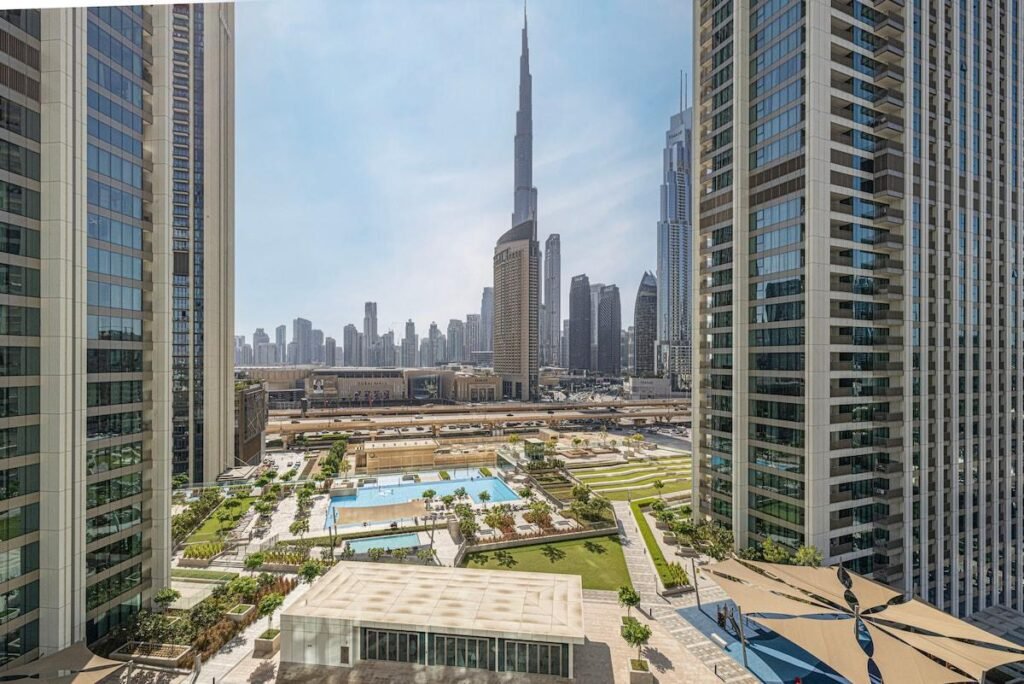
Home to the Burj Khalifa and Dubai Mall, Downtown commands premium prices but also strong rental demand from high-income professionals and tourists. Gross yields typically range from 5–6%.
Dubai Marina
A waterfront community with a mature rental market, Dubai Marina appeals to young professionals and short-term renters. Yields sit around 6–7%, with high occupancy rates year-round.
Business Bay
Positioned as Dubai’s central business district, Business Bay offers competitive entry prices relative to Downtown and yields often between 6–8%. It’s a popular choice for mid-range investors.
Palm Jumeirah
The iconic man-made island remains one of Dubai’s most prestigious addresses. Luxury villas and branded residences here attract ultra-high-net-worth buyers. Capital appreciation has been exceptional, with some villa prices doubling since 2020.
Dubai Hills Estate
A master-planned community with schools, a golf course, and a retail mall, Dubai Hills attracts families seeking a suburban lifestyle. Long-term capital growth potential is strong as the area continues to develop.
Jumeirah Village Circle (JVC)
JVC is consistently ranked among Dubai’s highest-yielding areas—often exceeding 8%—due to affordable entry prices and strong tenant demand from mid-income residents.
Types of Properties You Can Invest In
Dubai’s market offers a broad spectrum of investment options:
| Property Type | Best For | Typical Yield Range |
|---|---|---|
| Apartments | Rental income, first-time investors | 5–9% |
| Villas | Capital appreciation, family tenants | 4–6% |
| Townhouses | Long-term rentals, families | 5–7% |
| Luxury Properties | HNWI, capital appreciation | 3–5% |
| Off-Plan Projects | Early-stage capital gains | Varies by project |
| Commercial Properties | Business tenants, higher entry costs | 6–10% |
Off-plan properties in Dubai deserve special mention. Many developers offer payment plans stretching beyond project completion—sometimes requiring only 10–20% upfront. This has made off-plan investment accessible to a wider pool of buyers and generated significant returns for early investors in communities like Dubai Creek Harbour and Emaar Beachfront.
Dubai Real Estate Market Trends in 2026
The Dubai real estate market entered 2026 with strong momentum.
Property price growth has continued, particularly in the villa and luxury segments. Prime areas like Palm Jumeirah and Emirates Hills have seen year-on-year price increases exceeding 15%, while mid-market districts have recorded steadier but consistent growth of 8–12%.
Rental demand remains elevated. A combination of population growth, tourism recovery, and an influx of remote workers and digital nomads has kept vacancy rates low across most residential segments.
Luxury market performance has been exceptional. Dubai now ranks among the world’s top three cities for ultra-luxury residential transactions, competing directly with London and Monaco. International buyers from Europe, Asia, and the CIS region have been particularly active.
Future development projects continue to shape the market. Major upcoming developments include Dubai Islands, Meydan City, and the expansion of Palm Jebel Ali—all of which present early-mover investment opportunities. For the latest data, the UAE Government Portal and Dubai Economy and Tourism publish regular market updates.
For a detailed breakdown of market data, visit our Dubai Real Estate Market Trends resource.
Potential Risks of Investing in Dubai
No investment is without risk. Here’s an honest look at the challenges:
Market fluctuations. Dubai’s market has experienced volatility before—most notably the 2008–2009 correction and a softer period between 2014–2020. While current fundamentals are strong, property values can decline if oil prices drop sharply or global economic conditions deteriorate.
Service charges. Annual service charges (maintenance fees) can be significant in premium buildings and communities, ranging from AED 10–30 per square foot. These costs affect net yield calculations and should be factored into any ROI analysis.
Currency exchange risks. The UAE dirham is pegged to the US dollar, which provides some stability. However, investors holding other currencies—GBP, EUR, INR—face exchange rate exposure that can affect actual returns.
Choosing the right developer. Not all developers have equal track records. Some have faced delays or financial difficulties. Always verify a developer’s registration with RERA and review their project delivery history before committing funds. Is Dubai real estate a good investment in 2026? Discover rental yields, tax benefits, top investment areas, risks, and expert buying tips.
Your
Who Should Invest in Dubai Real Estate?
Dubai property suits a range of investor profiles—but it’s not the right fit for everyone.
- First-time investors can enter the market with relatively modest capital, particularly in areas like JVC or International City, where apartments start below AED 500,000.
- NRIs (Non-Resident Indians) are among the most active buyer groups in Dubai. Geographic proximity, cultural familiarity, and strong yield potential make it an attractive alternative to domestic Indian property markets.
- US and UK investors benefit from the tax-free environment, which effectively boosts net returns compared to taxable gains at home.
- High-net-worth individuals targeting trophy assets or branded residences will find Dubai’s luxury market offering genuinely world-class options at prices below equivalent properties in London or New York.
- Long-term investors focused on capital appreciation should concentrate on emerging districts and off-plan projects where early-entry pricing offers the most upside.
Tips for Buying Property in Dubai
Follow these steps to protect your investment and streamline the buying process. For a step-by-step walkthrough, refer to our Dubai Property Buying Guide.
- Set your budget clearly. Factor in the 4% DLD transfer fee, agent commission (typically 2%), and any mortgage arrangement fees on top of the property purchase price.
- Choose the right location. Match your investment goal—yield vs. appreciation vs. lifestyle—to the district that best serves it.
- Verify the developer. Check RERA registration, review completed projects, and assess financial stability before purchasing off-plan.
- Work with a RERA-registered agent. Licensed agents are accountable to RERA’s code of conduct. Verify credentials before signing any agreements.
- Understand the legal requirements. Non-residents can purchase in freehold zones without restriction. Confirm the property falls within a designated freehold area before proceeding.
For a full overview of tax benefits of buying property in Dubai, including how the zero-tax environment compares to other markets, see our dedicated resource.
Dubai vs. Other Global Property Markets
| City | Average Gross Yield | Capital Gains Tax | Annual Property Tax | Foreign Ownership |
|---|---|---|---|---|
| Dubai | 5–9% | None | None | Yes (freehold zones) |
| London | 3–4% | Up to 28% | Council tax applies | Yes |
| New York | 3–5% | Up to 20% | Applies | Yes |
| Singapore | 3–4% | None | Applies | Restricted |
Dubai’s combination of high yield, zero capital gains tax, and no annual property tax creates a net return profile that consistently outperforms these cities—particularly for investors in higher tax brackets in their home countries.
Is Dubai Real Estate Worth It? Final Verdict
Dubai’s real estate market offers a genuinely compelling investment case in 2026. Strong yields, zero property taxes, transparent regulations, Golden Visa incentives, and a government committed to long-term economic diversification all point in the same direction.
That said, the market rewards informed buyers. The difference between a high-performing investment and a disappointing one often comes down to location selection, developer credibility, and understanding total cost of ownership—not just headline price.
If you’re serious about exploring Dubai property investment, the next step is straightforward: speak with a qualified, RERA-registered real estate expert who understands your financial goals and can guide you through the process with clarity and integrity. Is Dubai real estate a good investment in 2026? Discover rental yields, tax benefits, top investment areas, risks, and expert buying tips.
Ready to explore your Dubai investment options? Connect with a trusted Dubai real estate advisor today and get personalized guidance based on your budget, goals, and timeline.
FAQs
Is Dubai real estate worth investing in?
Yes, for most investor profiles. Dubai offers some of the world’s highest rental yields (5–9%), zero capital gains tax, and strong capital appreciation—particularly in well-located residential and luxury segments. The market is regulated, transparent, and backed by consistent government investment in infrastructure.
Can foreigners buy property in Dubai?
Yes. Non-UAE nationals can purchase freehold property in designated zones across Dubai. There are no restrictions on nationality, and the buying process is well-defined and legally protected.
What is the minimum investment required to buy property in Dubai?
Entry-level apartments in affordable districts like JVC or Dubailand can be found for AED 400,000–600,000 (approximately USD 110,000–165,000). For Golden Visa eligibility, the minimum investment threshold is AED 2 million. Is Dubai real estate a good investment in 2026? Discover rental yields, tax benefits, top investment areas, risks, and expert buying tips.
Is rental income from Dubai property tax-free?
Yes. Dubai levies no income tax on rental earnings for individual investors. This applies to both residents and non-residents who own property in the UAE. Is Dubai Real Estate a Good Investment? Complete Guide for 2026
Which area of Dubai offers the highest rental ROI?
Jumeirah Village Circle (JVC) consistently ranks among the highest-yielding areas, with gross yields often exceeding 8%. Business Bay, Dubai Silicon Oasis, and International City also deliver strong yields for mid-range investors.
Meta Data
Meta title
Is Dubai Real Estate a Good Investment? (2026)
Meta description
Thinking of buying property in Dubai? Discover rental yields, tax benefits, top investment areas, risks, and expert tips in this complete 2026 guide.
URL slug
/is-dubai-real-estate-a-good-investment
Is Dubai Real Estate a Good Investment? Complete Guide for 2026
Few property markets have captured global attention quite like Dubai’s. Over the past decade, the city has transformed from a regional business hub into one of the world’s most sought-after real estate destinations—attracting investors from London, New York, Mumbai, and beyond. Record-breaking transaction volumes, tax-free returns, and a government actively courting foreign capital have all played their part.
But strong headlines don’t always tell the full story. Before committing capital to any market, smart investors ask hard questions: Are the yields real? What are the risks? Who benefits most—and who should think twice?
This guide answers all of that. Whether you’re exploring Dubai property investment for the first time or looking to expand an existing portfolio, you’ll find everything you need to make a confident, informed decision.
Table of Contents
- Why Invest in Dubai Real Estate?
- Key Benefits of Investing in Dubai Property
- Is Dubai Real Estate a Safe Investment?
- Best Areas to Invest in Dubai
- Types of Properties You Can Invest In
- Dubai Real Estate Market Trends in 2026
- Potential Risks of Investing in Dubai
- Who Should Invest in Dubai Real Estate?
- Tips for Buying Property in Dubai
- FAQs
Why Invest in Dubai Real Estate?
Dubai’s real estate market has delivered something rare: consistent growth during a period when many global cities have struggled with stagnant demand, rising interest rates, and price corrections.
Several structural factors drive this performance.
Tax-free investment environment. Dubai levies no income tax, no capital gains tax, and no inheritance tax. For investors used to markets like the UK or US—where property gains can be taxed at 28% or more—this is a significant financial advantage. Is Dubai Real Estate a Good Investment? Complete Guide for 2026
High rental yields. Dubai regularly outperforms major global cities on rental yield. While London averages around 3–4% gross yield and New York sits between 3–5%, Dubai’s yields frequently range from 5–9% depending on the area and property type. Certain districts, like Jumeirah Village Circle (JVC), have recorded yields above 8%.
Capital appreciation. According to the Dubai Land Department (DLD), residential property prices rose by approximately 20% in 2023, with growth continuing into 2025 and 2026 across key districts.
Government-backed stability. The UAE government has consistently implemented pro-investor reforms—expanding freehold ownership zones, launching the Golden Visa program, and introducing RERA regulations to protect buyers. These aren’t short-term incentives; they reflect a long-term strategy to position Dubai as a global financial capital.
World-class infrastructure. Dubai’s connectivity, healthcare, education, and transportation infrastructure rank among the best globally—factors that sustain both rental demand and long-term property values.
Key Benefits of Investing in Dubai Property
The case for Dubai property investment rests on a combination of financial and lifestyle benefits that few markets can match.
- No annual property tax. Unlike most developed markets, Dubai does not charge recurring property taxes. Ownership costs are primarily limited to service charges and the one-time 4% DLD transfer fee.
- Freehold ownership for foreigners. Non-UAE nationals can purchase freehold property in designated zones—meaning full ownership rights, not just leasehold. The list of freehold areas has expanded significantly in recent years. Is Dubai Real Estate a Good Investment? Complete Guide for 2026
- Golden Visa eligibility. Investing AED 2 million (approximately USD 545,000) or more in Dubai real estate qualifies buyers for the UAE’s 10-year Golden Visa, granting long-term residency. Read our full Dubai Golden Visa Guide for eligibility details.
- High ROI compared to global peers. When you factor in rental yields, tax advantages, and capital appreciation, Dubai’s total return profile is highly competitive—especially against cities like Singapore, where entry prices are higher and yields are lower.
- Strong demand from tourists and expatriates. Dubai’s expatriate population makes up over 88% of residents, according to the Dubai Statistics Center. This creates consistent, durable demand for rental accommodation across all price points.
Is Dubai Real Estate a Safe Investment?
A common concern among international buyers is regulatory transparency. Dubai has addressed this directly with a robust legal framework for property transactions. Is Dubai Real Estate a Good Investment? Complete Guide for 2026
RERA (Real Estate Regulatory Agency) governs all real estate activities in Dubai, licensing agents and developers, regulating rental disputes, and overseeing escrow accounts for off-plan developments. Developers are legally required to deposit buyer funds into RERA-monitored escrow accounts—reducing the risk of capital misuse.
The Dubai Land Department (DLD) registers all property transactions and maintains a public record of ownership. Buyers can verify titles and transaction histories through the Dubai REST App, the government’s official real estate portal.
Investor protection laws have been strengthened in recent years. Developers who fail to deliver projects on time face penalties, and buyers have legal recourse through the Rental Disputes Centre and Dubai Courts.
Compared to many emerging markets, Dubai’s buying process is transparent, well-documented, and increasingly digitized. That said, due diligence—especially when purchasing off-plan—remains essential.
Best Areas to Invest in Dubai
Location drives performance in any real estate market. In Dubai, the following districts consistently attract investor interest. For a deeper breakdown, visit our guide to the Best Areas to Invest in Dubai.
Downtown Dubai
Home to the Burj Khalifa and Dubai Mall, Downtown commands premium prices but also strong rental demand from high-income professionals and tourists. Gross yields typically range from 5–6%. Is Dubai Real Estate a Good Investment? Complete Guide for 2026
Dubai Marina
A waterfront community with a mature rental market, Dubai Marina appeals to young professionals and short-term renters. Yields sit around 6–7%, with high occupancy rates year-round.
Business Bay
Positioned as Dubai’s central business district, Business Bay offers competitive entry prices relative to Downtown and yields often between 6–8%. It’s a popular choice for mid-range investors.
Palm Jumeirah
The iconic man-made island remains one of Dubai’s most prestigious addresses. Luxury villas and branded residences here attract ultra-high-net-worth buyers. Capital appreciation has been exceptional, with some villa prices doubling since 2020.
Dubai Hills Estate
A master-planned community with schools, a golf course, and a retail mall, Dubai Hills attracts families seeking a suburban lifestyle. Long-term capital growth potential is strong as the area continues to develop.
Jumeirah Village Circle (JVC)
JVC is consistently ranked among Dubai’s highest-yielding areas—often exceeding 8%—due to affordable entry prices and strong tenant demand from mid-income residents. Is Dubai Real Estate a Good Investment? Complete Guide for 2026
Types of Properties You Can Invest In
Dubai’s market offers a broad spectrum of investment options:
| Property Type | Best For | Typical Yield Range |
|---|---|---|
| Apartments | Rental income, first-time investors | 5–9% |
| Villas | Capital appreciation, family tenants | 4–6% |
| Townhouses | Long-term rentals, families | 5–7% |
| Luxury Properties | HNWI, capital appreciation | 3–5% |
| Off-Plan Projects | Early-stage capital gains | Varies by project |
| Commercial Properties | Business tenants, higher entry costs | 6–10% |
Off-plan properties in Dubai deserve special mention. Many developers offer payment plans stretching beyond project completion—sometimes requiring only 10–20% upfront. This has made off-plan investment accessible to a wider pool of buyers and generated significant returns for early investors in communities like Dubai Creek Harbour and Emaar Beachfront. Is Dubai Real Estate a Good Investment? Complete Guide for 2026
Dubai Real Estate Market Trends in 2026
The Dubai real estate market entered 2026 with strong momentum.
Property price growth has continued, particularly in the villa and luxury segments. Prime areas like Palm Jumeirah and Emirates Hills have seen year-on-year price increases exceeding 15%, while mid-market districts have recorded steadier but consistent growth of 8–12%.
Rental demand remains elevated. A combination of population growth, tourism recovery, and an influx of remote workers and digital nomads has kept vacancy rates low across most residential segments.
Luxury market performance has been exceptional. Dubai now ranks among the world’s top three cities for ultra-luxury residential transactions, competing directly with London and Monaco. International buyers from Europe, Asia, and the CIS region have been particularly active. Is Dubai Real Estate a Good Investment? Complete Guide for 2026
Future development projects continue to shape the market. Major upcoming developments include Dubai Islands, Meydan City, and the expansion of Palm Jebel Ali—all of which present early-mover investment opportunities. For the latest data, the UAE Government Portal and Dubai Economy and Tourism publish regular market updates.
For a detailed breakdown of market data, visit our Dubai Real Estate Market Trends resource.
Potential Risks of Investing in Dubai
No investment is without risk. Here’s an honest look at the challenges:
Market fluctuations. Dubai’s market has experienced volatility before—most notably the 2008–2009 correction and a softer period between 2014–2020. While current fundamentals are strong, property values can decline if oil prices drop sharply or global economic conditions deteriorate.
Service charges. Annual service charges (maintenance fees) can be significant in premium buildings and communities, ranging from AED 10–30 per square foot. These costs affect net yield calculations and should be factored into any ROI analysis. Is Dubai Real Estate a Good Investment? Complete Guide for 2026
Currency exchange risks. The UAE dirham is pegged to the US dollar, which provides some stability. However, investors holding other currencies—GBP, EUR, INR—face exchange rate exposure that can affect actual returns.
Choosing the right developer. Not all developers have equal track records. Some have faced delays or financial difficulties. Always verify a developer’s registration with RERA and review their project delivery history before committing funds.
Who Should Invest in Dubai Real Estate?
Dubai property suits a range of investor profiles—but it’s not the right fit for everyone.
- First-time investors can enter the market with relatively modest capital, particularly in areas like JVC or International City, where apartments start below AED 500,000.
- NRIs (Non-Resident Indians) are among the most active buyer groups in Dubai. Geographic proximity, cultural familiarity, and strong yield potential make it an attractive alternative to domestic Indian property markets.
- US and UK investors benefit from the tax-free environment, which effectively boosts net returns compared to taxable gains at home.
- High-net-worth individuals targeting trophy assets or branded residences will find Dubai’s luxury market offering genuinely world-class options at prices below equivalent properties in London or New York.
- Long-term investors focused on capital appreciation should concentrate on emerging districts and off-plan projects where early-entry pricing offers the most upside.
Tips for Buying Property in Dubai
Follow these steps to protect your investment and streamline the buying process. For a step-by-step walkthrough, refer to our Dubai Property Buying Guide.
- Set your budget clearly. Factor in the 4% DLD transfer fee, agent commission (typically 2%), and any mortgage arrangement fees on top of the property purchase price.
- Choose the right location. Match your investment goal—yield vs. appreciation vs. lifestyle—to the district that best serves it.
- Verify the developer. Check RERA registration, review completed projects, and assess financial stability before purchasing off-plan.
- Work with a RERA-registered agent. Licensed agents are accountable to RERA’s code of conduct. Verify credentials before signing any agreements.
- Understand the legal requirements. Non-residents can purchase in freehold zones without restriction. Confirm the property falls within a designated freehold area before proceeding.
For a full overview of tax benefits of buying property in Dubai, including how the zero-tax environment compares to other markets, see our dedicated resource.
Dubai vs. Other Global Property Markets
| City | Average Gross Yield | Capital Gains Tax | Annual Property Tax | Foreign Ownership |
|---|---|---|---|---|
| Dubai | 5–9% | None | None | Yes (freehold zones) |
| London | 3–4% | Up to 28% | Council tax applies | Yes |
| New York | 3–5% | Up to 20% | Applies | Yes |
| Singapore | 3–4% | None | Applies | Restricted |
Dubai’s combination of high yield, zero capital gains tax, and no annual property tax creates a net return profile that consistently outperforms these cities—particularly for investors in higher tax brackets in their home countries.
Is Dubai Real Estate Worth It? Final Verdict
Dubai’s real estate market offers a genuinely compelling investment case in 2026. Strong yields, zero property taxes, transparent regulations, Golden Visa incentives, and a government committed to long-term economic diversification all point in the same direction.
That said, the market rewards informed buyers. The difference between a high-performing investment and a disappointing one often comes down to location selection, developer credibility, and understanding total cost of ownership—not just headline price. Is Dubai Real Estate a Good Investment? Complete Guide for 2026
If you’re serious about exploring Dubai property investment, the next step is straightforward: speak with a qualified, RERA-registered real estate expert who understands your financial goals and can guide you through the process with clarity and integrity.
Ready to explore your Dubai investment options? Connect with a trusted Dubai real estate advisor today and get personalized guidance based on your budget, goals, and timeline.
FAQs
Is Dubai real estate worth investing in?
Yes, for most investor profiles. Dubai offers some of the world’s highest rental yields (5–9%), zero capital gains tax, and strong capital appreciation—particularly in well-located residential and luxury segments. The market is regulated, transparent, and backed by consistent government investment in infrastructure.
Can foreigners buy property in Dubai?
Yes. Non-UAE nationals can purchase freehold property in designated zones across Dubai. There are no restrictions on nationality, and the buying process is well-defined and legally protected.
What is the minimum investment required to buy property in Dubai?
Entry-level apartments in affordable districts like JVC or Dubailand can be found for AED 400,000–600,000 (approximately USD 110,000–165,000). For Golden Visa eligibility, the minimum investment threshold is AED 2 million. Is Dubai Real Estate a Good Investment? Complete Guide for 2026
Is rental income from Dubai property tax-free?
Yes. Dubai levies no income tax on rental earnings for individual investors. This applies to both residents and non-residents who own property in the UAE.
Which area of Dubai offers the highest rental ROI?
Jumeirah Village Circle (JVC) consistently ranks among the highest-yielding areas, with gross yields often exceeding 8%. Business Bay, Dubai Silicon Oasis, and International City also deliver strong yields for mid-range investors. Is Dubai Real Estate a Good Investment? Complete Guide for 2026
Meta Data
Meta title
Is Dubai Real Estate a Good Investment? (2026)
Meta description
Thinking of buying property in Dubai? Discover rental yields, tax benefits, top investment areas, risks, and expert tips in this complete 2026 guide.
URL slug
/is-dubai-real-estate-a-good-investment
Few property markets have captured global attention quite like Dubai’s. Over the past decade, the city has transformed from a regional business hub into one of the world’s most sought-after real estate destinations—attracting investors from London, New York, Mumbai, and beyond. Record-breaking transaction volumes, tax-free returns, and a government actively courting foreign capital have all played their part.
But strong headlines don’t always tell the full story. Before committing capital to any market, smart investors ask hard questions: Are the yields real? What are the risks? Who benefits most—and who should think twice?
This guide answers all of that. Whether you’re exploring Dubai property investment for the first time or looking to expand an existing portfolio, you’ll find everything you need to make a confident, informed decision.
Table of Contents
- Why Invest in Dubai Real Estate?
- Key Benefits of Investing in Dubai Property
- Is Dubai Real Estate a Safe Investment?
- Best Areas to Invest in Dubai
- Types of Properties You Can Invest In
- Dubai Real Estate Market Trends in 2026
- Potential Risks of Investing in Dubai
- Who Should Invest in Dubai Real Estate?
- Tips for Buying Property in Dubai
- FAQs
Why Invest in Dubai Real Estate?
Dubai’s real estate market has delivered something rare: consistent growth during a period when many global cities have struggled with stagnant demand, rising interest rates, and price corrections.
Several structural factors drive this performance.
Tax-free investment environment. Dubai levies no income tax, no capital gains tax, and no inheritance tax. For investors used to markets like the UK or US—where property gains can be taxed at 28% or more—this is a significant financial advantage. Is Dubai Real Estate a Good Investment? Complete Guide for 2026
High rental yields. Dubai regularly outperforms major global cities on rental yield. While London averages around 3–4% gross yield and New York sits between 3–5%, Dubai’s yields frequently range from 5–9% depending on the area and property type. Certain districts, like Jumeirah Village Circle (JVC), have recorded yields above 8%.
Capital appreciation. According to the Dubai Land Department (DLD), residential property prices rose by approximately 20% in 2023, with growth continuing into 2025 and 2026 across key districts.
Government-backed stability. The UAE government has consistently implemented pro-investor reforms—expanding freehold ownership zones, launching the Golden Visa program, and introducing RERA regulations to protect buyers. These aren’t short-term incentives; they reflect a long-term strategy to position Dubai as a global financial capital. Is Dubai Real Estate a Good Investment? Complete Guide for 2026
World-class infrastructure. Dubai’s connectivity, healthcare, education, and transportation infrastructure rank among the best globally—factors that sustain both rental demand and long-term property values.
Key Benefits of Investing in Dubai Property
The case for Dubai property investment rests on a combination of financial and lifestyle benefits that few markets can match.
- No annual property tax. Unlike most developed markets, Dubai does not charge recurring property taxes. Ownership costs are primarily limited to service charges and the one-time 4% DLD transfer fee.
- Freehold ownership for foreigners. Non-UAE nationals can purchase freehold property in designated zones—meaning full ownership rights, not just leasehold. The list of freehold areas has expanded significantly in recent years.
- Golden Visa eligibility. Investing AED 2 million (approximately USD 545,000) or more in Dubai real estate qualifies buyers for the UAE’s 10-year Golden Visa, granting long-term residency. Read our full Dubai Golden Visa Guide for eligibility details.
- High ROI compared to global peers. When you factor in rental yields, tax advantages, and capital appreciation, Dubai’s total return profile is highly competitive—especially against cities like Singapore, where entry prices are higher and yields are lower.
- Strong demand from tourists and expatriates. Dubai’s expatriate population makes up over 88% of residents, according to the Dubai Statistics Center. This creates consistent, durable demand for rental accommodation across all price points.
Is Dubai Real Estate a Safe Investment?
A common concern among international buyers is regulatory transparency. Dubai has addressed this directly with a robust legal framework for property transactions.
RERA (Real Estate Regulatory Agency) governs all real estate activities in Dubai, licensing agents and developers, regulating rental disputes, and overseeing escrow accounts for off-plan developments. Developers are legally required to deposit buyer funds into RERA-monitored escrow accounts—reducing the risk of capital misuse.
The Dubai Land Department (DLD) registers all property transactions and maintains a public record of ownership. Buyers can verify titles and transaction histories through the Dubai REST App, the government’s official real estate portal.
Investor protection laws have been strengthened in recent years. Developers who fail to deliver projects on time face penalties, and buyers have legal recourse through the Rental Disputes Centre and Dubai Courts. Is Dubai Real Estate a Good Investment? Complete Guide for 2026
Compared to many emerging markets, Dubai’s buying process is transparent, well-documented, and increasingly digitized. That said, due diligence—especially when purchasing off-plan—remains essential.
Best Areas to Invest in Dubai
Location drives performance in any real estate market. In Dubai, the following districts consistently attract investor interest. For a deeper breakdown, visit our guide to the Best Areas to Invest in Dubai.
Downtown Dubai
Home to the Burj Khalifa and Dubai Mall, Downtown commands premium prices but also strong rental demand from high-income professionals and tourists. Gross yields typically range from 5–6%.
Dubai Marina
A waterfront community with a mature rental market, Dubai Marina appeals to young professionals and short-term renters. Yields sit around 6–7%, with high occupancy rates year-round.
Business Bay
Positioned as Dubai’s central business district, Business Bay offers competitive entry prices relative to Downtown and yields often between 6–8%. It’s a popular choice for mid-range investors. Is Dubai Real Estate a Good Investment? Complete Guide for 2026
Palm Jumeirah
The iconic man-made island remains one of Dubai’s most prestigious addresses. Luxury villas and branded residences here attract ultra-high-net-worth buyers. Capital appreciation has been exceptional, with some villa prices doubling since 2020. Is Dubai Real Estate a Good Investment? Complete Guide for 2026
Dubai Hills Estate
A master-planned community with schools, a golf course, and a retail mall, Dubai Hills attracts families seeking a suburban lifestyle. Long-term capital growth potential is strong as the area continues to develop.
Jumeirah Village Circle (JVC)
JVC is consistently ranked among Dubai’s highest-yielding areas—often exceeding 8%—due to affordable entry prices and strong tenant demand from mid-income residents. Is Dubai Real Estate a Good Investment? Complete Guide for 2026
Types of Properties You Can Invest In
Dubai’s market offers a broad spectrum of investment options:
| Property Type | Best For | Typical Yield Range |
|---|---|---|
| Apartments | Rental income, first-time investors | 5–9% |
| Villas | Capital appreciation, family tenants | 4–6% |
| Townhouses | Long-term rentals, families | 5–7% |
| Luxury Properties | HNWI, capital appreciation | 3–5% |
| Off-Plan Projects | Early-stage capital gains | Varies by project |
| Commercial Properties | Business tenants, higher entry costs | 6–10% |
Off-plan properties in Dubai deserve special mention. Many developers offer payment plans stretching beyond project completion—sometimes requiring only 10–20% upfront. This has made off-plan investment accessible to a wider pool of buyers and generated significant returns for early investors in communities like Dubai Creek Harbour and Emaar Beachfront.
Dubai Real Estate Market Trends in 2026
The Dubai real estate market entered 2026 with strong momentum.
Property price growth has continued, particularly in the villa and luxury segments. Prime areas like Palm Jumeirah and Emirates Hills have seen year-on-year price increases exceeding 15%, while mid-market districts have recorded steadier but consistent growth of 8–12%. Is Dubai Real Estate a Good Investment? Complete Guide for 2026
Rental demand remains elevated. A combination of population growth, tourism recovery, and an influx of remote workers and digital nomads has kept vacancy rates low across most residential segments.
Luxury market performance has been exceptional. Dubai now ranks among the world’s top three cities for ultra-luxury residential transactions, competing directly with London and Monaco. International buyers from Europe, Asia, and the CIS region have been particularly active.
Future development projects continue to shape the market. Major upcoming developments include Dubai Islands, Meydan City, and the expansion of Palm Jebel Ali—all of which present early-mover investment opportunities. For the latest data, the UAE Government Portal and Dubai Economy and Tourism publish regular market updates.
For a detailed breakdown of market data, visit our Dubai Real Estate Market Trends resource.
Potential Risks of Investing in Dubai
No investment is without risk. Here’s an honest look at the challenges:
Market fluctuations. Dubai’s market has experienced volatility before—most notably the 2008–2009 correction and a softer period between 2014–2020. While current fundamentals are strong, property values can decline if oil prices drop sharply or global economic conditions deteriorate.
Service charges. Annual service charges (maintenance fees) can be significant in premium buildings and communities, ranging from AED 10–30 per square foot. These costs affect net yield calculations and should be factored into any ROI analysis. Is Dubai Real Estate a Good Investment? Complete Guide for 2026
Currency exchange risks. The UAE dirham is pegged to the US dollar, which provides some stability. However, investors holding other currencies—GBP, EUR, INR—face exchange rate exposure that can affect actual returns. Is Dubai Real Estate a Good Investment? Complete Guide for 2026 Is Dubai Real Estate a Good Investment? Complete Guide for 2026
Choosing the right developer. Not all developers have equal track records. Some have faced delays or financial difficulties. Always verify a developer’s registration with RERA and review their project delivery history before committing funds.Is Dubai Real Estate a Good Investment? Complete Guide for 2026
Who Should Invest in Dubai Real Estate?
Dubai property suits a range of investor profiles—but it’s not the right fit for everyone.
- First-time investors can enter the market with relatively modest capital, particularly in areas like JVC or International City, where apartments start below AED 500,000.
- NRIs (Non-Resident Indians) are among the most active buyer groups in Dubai. Geographic proximity, cultural familiarity, and strong yield potential make it an attractive alternative to domestic Indian property markets.
- US and UK investors benefit from the tax-free environment, which effectively boosts net returns compared to taxable gains at home.
- High-net-worth individuals targeting trophy assets or branded residences will find Dubai’s luxury market offering genuinely world-class options at prices below equivalent properties in London or New York. Is Dubai Real Estate a Good Investment? Complete Guide for 2026
- Long-term investors focused on capital appreciation should concentrate on emerging districts and off-plan projects where early-entry pricing offers the most upside. Is Dubai Real Estate a Good Investment? Complete Guide for 2026
Tips for Buying Property in Dubai
Follow these steps to protect your investment and streamline the buying process. For a step-by-step walkthrough, refer to our Dubai Property Buying Guide.
- Set your budget clearly. Factor in the 4% DLD transfer fee, agent commission (typically 2%), and any mortgage arrangement fees on top of the property purchase price.
- Choose the right location. Match your investment goal—yield vs. appreciation vs. lifestyle—to the district that best serves it.
- Verify the developer. Check RERA registration, review completed projects, and assess financial stability before purchasing off-plan.
- Work with a RERA-registered agent. Licensed agents are accountable to RERA’s code of conduct. Verify credentials before signing any agreements.
- Understand the legal requirements. Non-residents can purchase in freehold zones without restriction. Confirm the property falls within a designated freehold area before proceeding.
For a full overview of tax benefits of buying property in Dubai, including how the zero-tax environment compares to other markets, see our dedicated resource.
Dubai vs. Other Global Property Markets
| City | Average Gross Yield | Capital Gains Tax | Annual Property Tax | Foreign Ownership |
|---|---|---|---|---|
| Dubai | 5–9% | None | None | Yes (freehold zones) |
| London | 3–4% | Up to 28% | Council tax applies | Yes |
| New York | 3–5% | Up to 20% | Applies | Yes |
| Singapore | 3–4% | None | Applies | Restricted |
Dubai’s combination of high yield, zero capital gains tax, and no annual property tax creates a net return profile that consistently outperforms these cities—particularly for investors in higher tax brackets in their home countries.
Is Dubai Real Estate Worth It? Final Verdict
Dubai’s real estate market offers a genuinely compelling investment case in 2026. Strong yields, zero property taxes, transparent regulations, Golden Visa incentives, and a government committed to long-term economic diversification all point in the same direction. Is Dubai Real Estate a Good Investment? Complete Guide for 2026
That said, the market rewards informed buyers. The difference between a high-performing investment and a disappointing one often comes down to location selection, developer credibility, and understanding total cost of ownership—not just headline price.
If you’re serious about exploring Dubai property investment, the next step is straightforward: speak with a qualified, RERA-registered real estate expert who understands your financial goals and can guide you through the process with clarity and integrity.
Ready to explore your Dubai investment options? Connect with a trusted Dubai real estate advisor today and get personalized guidance based on your budget, goals, and timeline.
FAQs
Is Dubai real estate worth investing in?
Yes, for most investor profiles. Dubai offers some of the world’s highest rental yields (5–9%), zero capital gains tax, and strong capital appreciation—particularly in well-located residential and luxury segments. The market is regulated, transparent, and backed by consistent government investment in infrastructure.
Can foreigners buy property in Dubai?
Yes. Non-UAE nationals can purchase freehold property in designated zones across Dubai. There are no restrictions on nationality, and the buying process is well-defined and legally protected.
What is the minimum investment required to buy property in Dubai?
Entry-level apartments in affordable districts like JVC or Dubailand can be found for AED 400,000–600,000 (approximately USD 110,000–165,000). For Golden Visa eligibility, the minimum investment threshold is AED 2 million. Is Dubai Real Estate a Good Investment? Complete Guide for 2026
Is rental income from Dubai property tax-free?
Yes. Dubai levies no income tax on rental earnings for individual investors. This applies to both residents and non-residents who own property in the UAE.
Which area of Dubai offers the highest rental ROI?
Jumeirah Village Circle (JVC) consistently ranks among the highest-yielding areas, with gross yields often exceeding 8%. Business Bay, Dubai Silicon Oasis, and International City also deliver strong yields for mid-range investors.
Meta Data
Meta title
Is Dubai Real Estate a Good Investment? (2026)
Meta description
Thinking of buying property in Dubai? Discover rental yields, tax benefits, top investment areas, risks, and expert tips in this complete 2026 guide.
URL slug
/is-dubai-real-estate-a-good-investment