So you’ve been scrolling through Instagram, looking at those impossible Palm Jumeirah villas and Downtown Dubai apartments with the Burj Khalifa staring back at you through floor-to-ceiling windows, and you’ve started asking yourself the obvious question: can a US citizen buy property in Dubai 2026, or is that just something rich influencers do?
Here’s the short version, and then we’ll get into all the details that actually matter. Yes, a US citizen can buy property in Dubai in 2026. You don’t need to be a UAE resident, you don’t need a local partner, and you don’t even need to visit the city before you buy. But — and this is where most blog posts stop short — there’s a real process here, real costs, and a few mistakes that trip up American buyers more than anyone else. That’s what we’re going to walk through.
If you’re working with a team like Puneet Chohan Capital, this entire process becomes a lot less intimidating, because someone is actually checking the paperwork on your behalf. But even if you’re just researching for now, this guide will give you a grounded, no-fluff picture of where things stand.
Can a US Citizen Buy Property in Dubai 2026? The Real Answer
Let’s settle this properly. Dubai opened its real estate market to foreign buyers back in 2002, and that decision changed the city forever. Today, Americans are treated the same as buyers from almost anywhere else in the world. There’s no nationality-based restriction stopping a US passport holder from owning a home, an apartment, or even land in Dubai.
The catch — and it’s a manageable one — is that ownership for foreigners is limited to what’s called a “freehold zone.” Outside of these zones, only UAE and GCC nationals can own property outright. Inside them, an American has exactly the same ownership rights as a local buyer: full title, the ability to sell whenever you want, the right to rent the place out, and the right to pass it on to your kids.
So when people ask “can a US citizen buy property in Dubai 2026,” the honest answer is: absolutely, as long as you’re buying inside one of these approved areas, which today number more than 60 communities across the emirate.
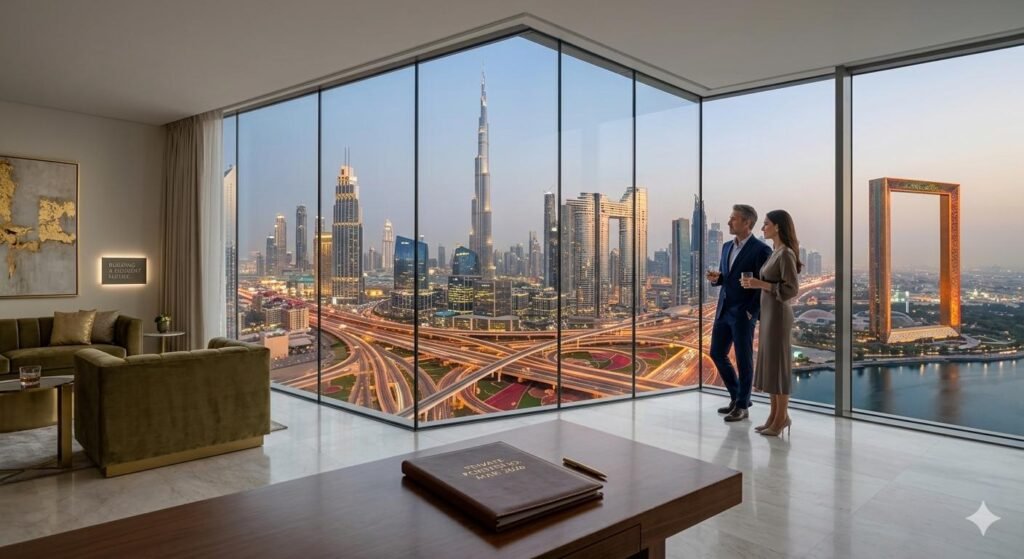
Dubai Property for US Citizens: Where Are You Actually Allowed to Buy?
This is the part a lot of first-time buyers skip past, and then they fall in love with a listing only to find out it’s not in a freehold zone. Here are the communities where Dubai property for US citizens is most commonly purchased:
- Dubai Marina — waterfront towers, strong rental demand, popular with young professionals
- Downtown Dubai — the Burj Khalifa neighborhood, premium pricing, high tourist footfall
- Palm Jumeirah — beachfront villas and branded residences, the classic “Dubai dream” address
- Business Bay — close to Downtown, more affordable entry point for apartments
- Dubai Hills Estate — family-friendly villas, golf course views, newer master-planned community
- Dubai Creek Harbour — a newer waterfront development with long-term growth potential
If a property isn’t listed in one of the official freehold areas, you’re typically looking at a leasehold arrangement of up to 99 years rather than full ownership. That’s not necessarily a bad deal, but it’s a completely different thing from owning the title outright, so always confirm zoning status with the Dubai Land Department before you get attached to a listing.
US Citizen Dubai Real Estate Rules You Need to Know Before You Buy
There’s a reasonably short list of rules that actually affect how a US citizen Dubai real estate purchase plays out in practice.
You don’t need UAE residency. This catches a lot of people off guard. A valid US passport is genuinely enough to complete a purchase. You’re not required to live in the country, work there, or hold any kind of visa beforehand.
You can buy remotely. Power of attorney arrangements, digital contracts, and virtual property tours mean plenty of American buyers complete their entire purchase without setting foot in the UAE. That said, most experienced investors still recommend visiting in person at least once before transferring serious money, simply so you can walk the building, check the finish quality, and meet your agent face to face.
Title deeds are registered with the government. Once your transaction closes, the Dubai Land Department issues an official title deed in your name. This isn’t some informal arrangement between you and a developer — it’s a government-backed record of ownership, similar in spirit to how county recorders work in the US.
There’s no cap on how many properties you can own. Unlike some countries that limit foreign buyers to one unit per building or impose nationality quotas, Dubai doesn’t restrict how many freehold properties an American can hold.
What Will It Actually Cost You?
This is usually where the excitement meets reality. Buying property in Dubai as an American involves a handful of government fees on top of the purchase price itself.
The headline number is the Dubai Land Department transfer fee, set at 4% of the purchase price. On a property worth roughly $410,000, that works out to around $16,500 paid directly to the DLD at the time of transfer. Layer on top of that a trustee office fee (around AED 4,000 for properties above AED 500,000), a small title deed fee, and — if you’re financing — a mortgage registration fee of 0.25% of the loan amount. Most buyers should budget somewhere between 7% and 9% of the purchase price for total closing costs once agency commission is included.
The flip side is what you won’t be paying. Dubai charges no annual property tax, no tax on rental income, and no capital gains tax when you eventually sell. For someone used to property tax bills in the US, that alone changes the long-term math on holding an investment property.
Freehold Property Dubai for Americans: Mortgages and Financing
If you’re not paying cash, financing freehold property Dubai for Americans is absolutely possible, but the terms differ from what you’d see for a UAE resident.
Non-resident Americans can typically borrow up to 50–60% of the property value, compared to the higher loan-to-value ratios available to residents. Mortgage rates for non-residents generally start around 4% and move with the broader rate environment, since the UAE Dirham is pegged to the US Dollar and tends to track Federal Reserve policy fairly closely. Banks will want to see proof of stable income, recent bank statements, and tax returns, and you’ll need to open a local UAE bank account to manage the mortgage payments. Major banks including Emirates NBD, HSBC, and Mashreq all work with non-resident American borrowers, though documentation requirements tend to be stricter than for residents.
The Tax Question Americans Can’t Ignore
Here’s the part that gets glossed over in a lot of glossy real estate brochures: Dubai not taxing your property doesn’t mean nobody taxes it. The United States taxes its citizens on worldwide income no matter where they live or where the asset is located. That means any rental income from your Dubai property needs to be reported on your US tax return, and if you eventually sell at a profit, that gain is reportable too.
If your combined foreign bank accounts exceed $10,000 at any point during the year, you’ll also need to file an FBAR (FinCEN Form 114). None of this should scare you off — millions of Americans own foreign property and stay fully compliant — but it does mean a conversation with a cross-border tax advisor before you sign anything is worth the cost. There’s no comprehensive US-UAE tax treaty, so you won’t automatically get a foreign tax credit to offset things; planning ahead actually matters here.
Does Buying Property Get You a Visa?
It can, and this is one of the more attractive side benefits. Invest at least AED 2 million (roughly $545,000) and you become eligible for the 10-year renewable Golden Visa. There’s also a shorter 2-year property investor visa available at a lower investment threshold, though it comes with fewer long-term benefits. Either way, owning property in Dubai does not automatically make you a citizen — the UAE doesn’t run a citizenship-by-investment program for typical buyers — but it does open the door to long-term, renewable residency if that’s part of your plan.
A Quick, Honest Step-by-Step
- Pick a property inside a designated freehold zone.
- Sign a Memorandum of Understanding (MOU) with the seller and pay a deposit, usually around 10%.
- Verify the property and seller through the Dubai Land Department before any serious money moves.
- If financing, secure mortgage pre-approval from a UAE bank.
- Complete the title transfer at the DLD, pay the 4% transfer fee, and collect your title deed.
Common Mistakes American Buyers Make
The single biggest mistake is paying a deposit before confirming the property is actually inside a freehold zone and that the seller is the verified, registered owner. A close second is skipping a DIFC will — without one, a foreign-owned property can end up distributed under Sharia inheritance principles by default, which may not reflect what you’d actually want for your family. Registering a will through the DIFC Wills Service Centre is a relatively small step that avoids a much bigger headache later.
Frequently Asked Questions
Can a US citizen buy property in Dubai 2026 without visiting the UAE? Yes. Many Americans complete the entire process remotely using virtual tours, digital paperwork, and a power of attorney, though an in-person visit before final payment is still a smart move.
Do I need a UAE visa to buy property in Dubai? No. A valid US passport is sufficient to purchase property as a non-resident.
Is rental income from my Dubai property taxed? Not by the UAE, but it must be reported on your US tax return since Americans are taxed on worldwide income.
How much money do I need to qualify for a Golden Visa through property investment? Roughly AED 2 million, or about $545,000, invested in real estate qualifies you for the 10-year renewable Golden Visa.
Are there annual property taxes in Dubai? No. Dubai does not charge annual property tax, rental income tax, or capital gains tax at the local level.
Final Thoughts
If you’ve made it this far, you already have a clearer answer than most people Googling “can a US citizen buy property in Dubai 2026” tonight. The short version stays the same: yes, you can, the process is genuinely accessible, and the tax-free local environment is a real advantage. The part that actually determines whether your investment goes well isn’t the legal eligibility — it’s getting the freehold verification, financing, and tax planning right from day one.
That’s exactly where having an experienced team in your corner pays for itself. If you’d like a second set of eyes on a specific property, a realistic cost breakdown for your budget, or just want to understand whether Dubai fits your bigger investment picture, reach out to Puneet Chohan Capital and we’ll walk through it together.
Image Alt Text Suggestions (for WordPress media library):
- “US citizen reviewing Dubai property documents and title deed”
- “Dubai Marina freehold apartments skyline for American investors”
- “Dubai Land Department title deed transfer process