If you’ve been searching for how to buy property in Dubai from California, chances are you’ve already scrolled through a dozen generic articles that say the same three things — “Dubai allows 100% foreign ownership,” “no property tax,” “great ROI” — and then leave you with zero idea of what actually happens next.
I get it. Buying real estate eight time zones away, in a country you may have visited once (or never), feels like it should be complicated. The good news? It’s actually one of the more straightforward international property markets out there, as long as you know the sequence of steps and don’t skip the boring paperwork part.
This guide walks through the entire process the way it really happens — not the marketing-brochure version.
Why Buy Property in Dubai From California in 2026?
Yes, fully. Dubai created designated freehold zones back in 2002, and they’ve expanded steadily since. In these zones — Downtown Dubai, Dubai Marina, Palm Jumeirah, Business Bay, Dubai Hills Estate, JVC, and dozens more — foreigners can buy, sell, lease, and pass on property exactly like a UAE citizen would, with full title deed ownership.
So no, you don’t need a local partner, a UAE passport, or even a visit to Dubai before you start the process (though I’d strongly recommend one before you sign anything).
Step 1: Decide Why You’re Buying
This sounds obvious, but it changes everything downstream. Are you buying to:
- Generate rental income while you stay in California
- Get the UAE Golden Visa (property over AED 2 million qualifies)
- Eventually relocate or split time between the two
- Simply diversify outside the US dollar and US real estate cycle
Your reason shapes which neighborhood, property type, and even payment plan makes sense. A landlord chasing yield wants a different building than someone parking money for a visa.
Documents Needed to Buy Property in Dubai From California
This is the part most blogs gloss over, and it’s where people get nervous for no reason. Dubai real estate laws for non-residents are actually some of the most transparent in the region, mainly because the Dubai Land Department (DLD) and RERA (the regulatory arm) digitized almost everything.
A few things worth knowing upfront:
- All transactions are recorded with the DLD, and you’ll get an official title deed in your name.
- Foreign buyers can purchase in freehold zones only — buying outside those zones isn’t legally possible for non-GCC nationals. How to Buy Property in Dubai From California: A No-Nonsense Guide
- There’s no requirement to be physically present in the UAE to complete a purchase. A Power of Attorney (POA) can handle the entire transaction on your behalf.
- Mortgages for non-residents exist but come with stricter loan-to-value limits than what residents get.
None of this requires a lawyer to interpret, but it’s worth having one look over your Sales and Purchase Agreement (SPA) before you sign — especially if you’re buying off-plan.
Step 3: Pick Your Property Type — Ready vs. Off-Plan
This decision matters more than people expect.
Ready (secondary market) properties are already built, you can inspect them, rent them out immediately, and the transaction closes faster — usually within 30 days. How to Buy Property in Dubai From California: A No-Nonsense Guide
Off-plan properties are sold directly by developers before or during construction, typically with flexible payment plans (think 10% down, then installments tied to construction milestones). They’re cheaper upfront and often appreciate by handover, but you’re taking on construction-timeline risk.
If you’re buying remotely from California and won’t be doing regular site visits, ready properties from established developers are usually the lower-stress choice for a first purchase. How to Buy Property in Dubai From California: A No-Nonsense Guide
Step 4: Pick the Right Area for Your Goals
This is where doing real homework on the best areas to buy property in Dubai pays off, because “best” depends entirely on your goal.
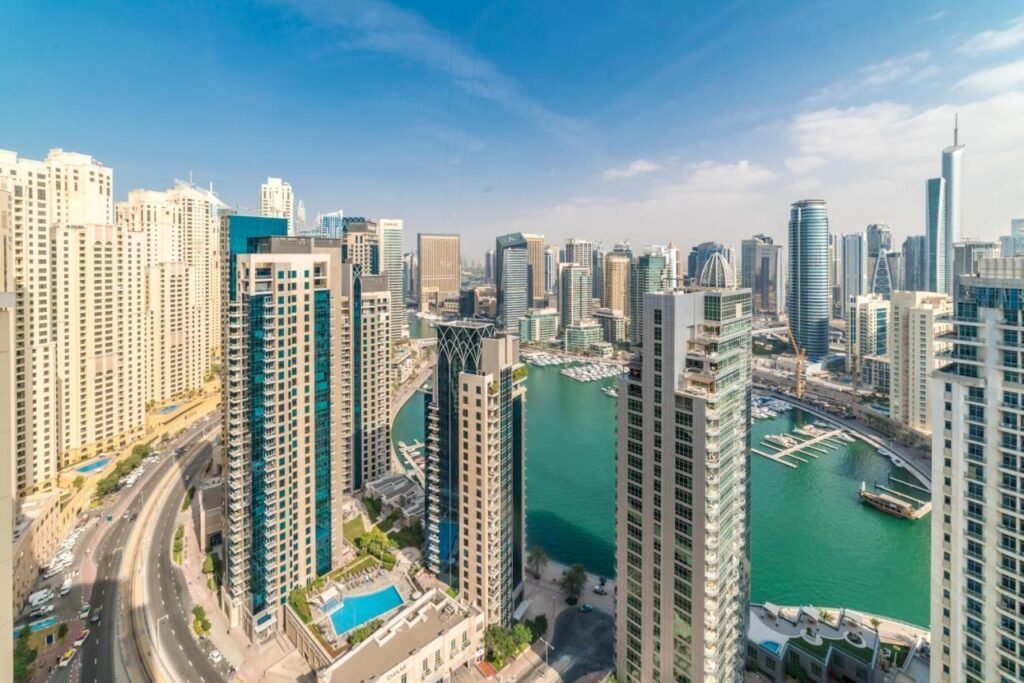
- Dubai Marina & JBR — strong short-term rental demand, popular with tourists and young professionals
- Downtown Dubai — premium pricing, iconic addresses (Burj Khalifa views), strong long-term capital appreciation
- Business Bay — close to Downtown at a lower price point, popular with corporate tenants
- Jumeirah Village Circle (JVC) — budget-friendly entry point, high rental yields, popular with first-time investors
- Dubai Hills Estate — family-oriented, villas and townhouses, golf course community
If yield is your priority, JVC and Business Bay tend to outperform. If you’re after long-term value and prestige, Downtown and Palm Jumeirah hold their ground. How to Buy Property in Dubai From California: A No-Nonsense Guide
Step 5: Figure Out How You’ll Pay (Cash vs. Financing)
Here’s where most California buyers hit their first real question: do you pay cash, or finance it?
Cash purchases are simpler and faster, and a lot of off-plan developers offer attractive post-handover payment plans that function almost like interest-free financing if you negotiate well.
Financing property purchase in Dubai from abroad is also possible, but expect these differences from a US mortgage:
- Non-resident buyers typically get 50-60% loan-to-value (compared to 75-80% for UAE residents)
- Interest rates are generally higher than what you’d see on a conventional US mortgage
- Banks will want proof of income, bank statements, and sometimes a minimum salary threshold
- A handful of UAE banks specialize in non-resident mortgages — HSBC, Emirates NBD, and Mashreq are commonly used by overseas buyers How to Buy Property in Dubai From California: A No-Nonsense Guide
If currency exchange and wiring large sums from a US account is part of your plan, loop in your bank early. International wires for six and seven-figure property purchases can trigger extra compliance checks, and you don’t want that holding up a deal at the closing stage.
Step 6: The Actual Buying Process, Step by Step
Once you’ve picked a property, here’s roughly how the transaction unfolds:
- Reservation — You sign a reservation form and pay a booking deposit (usually AED 10,000-50,000) to take the unit off the market.
- Sales and Purchase Agreement (SPA) — This is the binding contract. Read it carefully or have a real estate lawyer review it.
- Deposit payment — Typically 10% of the purchase price for ready properties.
- No Objection Certificate (NOC) — For resale properties, the seller’s developer issues this confirming no outstanding service charges or mortgages.
- Transfer at the Dubai Land Department — This is where ownership officially transfers and your title deed is issued. With a POA in place, your appointed representative can do this without you flying in.
- Final payment and handover — Balance is paid, keys (or access) are handed over, and you’re officially a Dubai property owner.
The whole process, once you’ve found the property, typically takes 2-6 weeks depending on whether it’s a cash or financed deal.
Step 7: Budget for the Extra Costs
Dubai doesn’t have annual property tax, which is a genuine advantage over California. But there are one-time and ongoing costs to plan for:
- DLD transfer fee: 4% of the property value
- Real estate agent commission: typically 2%
- Mortgage registration fee (if financing): 0.25% of loan amount
- Annual service charges: vary by building, usually AED 10-25 per sq. ft.
- NOC fee: AED 500-5,000 depending on the developer
Budget roughly 6-7% on top of the purchase price for these one-time costs.
What Buying Remotely From California Actually Looks Like
Realistically, here’s how most overseas buyers handle it without flying to Dubai:
- Property tours via live video calls with your agent
- Digital signing of the SPA and supporting documents
- A Power of Attorney (notarized and attested) so a trusted representative can complete the DLD transfer on your behalf
- Funds wired directly from your US bank to the seller’s or developer’s escrow account
It’s not flawless — time zones mean some calls happen at 9 PM Pacific — but thousands of overseas investors complete the entire purchase without ever setting foot in the country.
A Few Mistakes Worth Avoiding
- Skipping due diligence on the developer’s track record for off-plan projects
- Not budgeting for service charges, which can meaningfully affect your rental yield
- Using an unlicensed broker — always confirm RERA registration
- Wiring funds without confirming account details directly with the developer or DLD, given the rise in wire-fraud scams targeting overseas buyers
Is It Worth It From California?
For a lot of investors, yes — particularly given the combination of no property tax, strong rental yields compared to most US coastal markets, and a genuinely simple ownership process for non-residents. It won’t be the right fit for everyone, especially if your timeline or risk tolerance doesn’t match off-plan construction periods. But if you go in with a clear goal, a licensed agent, and a lawyer reviewing your SPA, buying property in Dubai from California is far more achievable than it first appears.