Off-Plan Property in Dubai for US Investors is increasingly visible on the radar of American property buyers looking to diversify internationally. Dubai is no longer simply a destination associated with luxury hotels, skyscrapers and short vacations. For many international buyers, the city is now being considered as a place to diversify real estate holdings, earn rental income and gain exposure to a fast-developing global market.
One part of the market attracts particular attention: off-plan property in Dubai. For Americans comparing overseas real estate, Off-Plan Property in Dubai for US Investors can offer a structured way to enter the market before construction is complete.
Buying off-plan means purchasing a property before construction is complete. In some cases, you may buy when the project is still in its early construction stage. Instead of paying the entire purchase price upfront, buyers normally follow a payment schedule linked to dates, construction milestones or completion.
That can sound appealing, particularly when the entry price is lower than comparable completed properties. But off-plan investing is not simply about finding the most attractive brochure or the longest payment plan. The appeal of Off-Plan Property in Dubai for US Investors should always be weighed against project quality, payment obligations and exit options.
For a US investor, there are additional questions.
Can an American legally own property in Dubai? How safe is the money paid during construction? What costs should be included in the investment calculation? What happens with US taxes? And how do you judge whether an off-plan project actually makes financial sense?
This guide breaks down the process in practical terms, so you can assess Off-Plan Property in Dubai for US Investors using real investment criteria rather than marketing claims.
Off-Plan Property in Dubai for US Investors: What You Need to Know
An off-plan property is a residential or commercial unit purchased from a developer before the property has been completed. In simple terms, Off-Plan Property in Dubai for US Investors means committing to a Dubai property during the development stage while evaluating the purchase from a US investor’s perspective.
Understanding ownership rules is essential when considering Off-Plan Property in Dubai for US Investors.
You are essentially buying based on the project’s approved plans, specifications, location, developer commitment and contractual documents.
Depending on the project, off-plan inventory may include:
- Apartments
- Townhouses
- Villas
- Branded residences
- Waterfront properties
- Luxury penthouses
- Commercial units
Instead of receiving immediate possession, the buyer signs a sale agreement and makes payments over the development period.
Dubai Land Department has a formal provisional registration process for off-plan transactions. Developers register eligible off-plan sales through the Oqood system, and buyers can receive documentation relating to the provisional registration.
That regulatory framework is one reason off-plan property in Dubai should not be viewed in the same way as buying into an entirely unregulated overseas development.
However, regulation does not remove investment risk. You still need to evaluate the developer, project, contract and financial numbers carefully. That is especially important with Off-Plan Property in Dubai for US Investors, where the investor may be managing the entire purchase from overseas.
External resource: Dubai Land Department – Initial Sale Registration
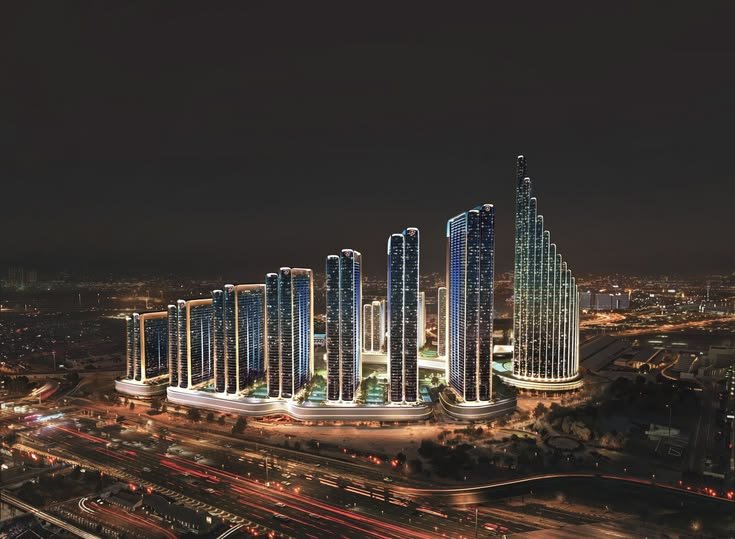
Can US Citizens Buy Property in Dubai?
Yes. Being a US citizen does not prevent you from purchasing Dubai real estate. This makes Off-Plan Property in Dubai for US Investors accessible to Americans who meet the developer’s purchase requirements and buy in an eligible ownership area.
Foreigners, including people who are not UAE residents, can acquire freehold ownership in areas designated for foreign property ownership in Dubai. Depending on the location and development, other property rights such as long-term leasehold or usufruct may also apply.
This means you do not necessarily need to become a UAE resident before purchasing property. For that reason, Off-Plan Property in Dubai for US Investors can be considered even by buyers who plan to remain primarily based in the United States.
Popular freehold communities have historically included areas such as Downtown Dubai, Dubai Marina, Palm Jumeirah, Business Bay, Dubai Hills Estate and several newer master-planned districts, but buyers should verify the exact property’s ownership status rather than assuming an entire location qualifies.
External resource: UAE Government – Expatriates Buying Property
For investors still comparing locations and property categories, our Apartments for Sale in Dubai guide can help you understand the broader market before narrowing your search to an off-plan launch.
Why Off-Plan Property in Dubai for US Investors Is Attracting Attention
There is no single reason. Different investors approach Dubai with different objectives. Interest in Off-Plan Property in Dubai for US Investors often comes from a mix of diversification, staged payments, rental potential and exposure to developing communities.
Some want geographic diversification. Others are looking for rental income. Some are attracted by payment plans, while others want exposure to neighborhoods that are still developing.
There is also one practical currency advantage for Americans.
The UAE dirham is pegged to the US dollar. The Central Bank of the UAE maintains intervention rates around AED 3.672–3.673 per US dollar, while the commonly referenced USD/AED rate is approximately 3.6725.
For a US investor, this removes much of the direct USD/AED currency volatility that might exist when buying property in countries with freely floating currencies.
That does not eliminate investment risk, but it makes conversions easier to understand. When comparing Off-Plan Property in Dubai for US Investors, US buyers can therefore review purchase prices and future obligations in both AED and USD with relatively straightforward currency conversion.
For example:
AED 1,000,000 ≈ USD 272,000
AED 2,000,000 ≈ USD 544,000
AED 3,000,000 ≈ USD 817,000
Exact conversion amounts can vary slightly depending on bank charges and transfer rates.
If you prefer reviewing Dubai prices in dollars rather than dirhams, see our complete House Prices in Dubai in USD guide.
Payment Plans for Off-Plan Property in Dubai for US Investors
One of the biggest differences between off-plan and completed property is how the purchase price is paid.
A completed property may require a significant amount of capital at transfer.
An off-plan property can spread payments across several years. This staged structure is one reason Off-Plan Property in Dubai for US Investors may appeal to buyers who prefer not to deploy the full purchase price at once.
A simplified example could look like this:
| Stage | Example Payment |
|---|---|
| Reservation/Booking | 10% |
| During Construction | 50% |
| On Completion | 20% |
| Post-Handover | 20% |
This is only an illustration.
Some projects may offer 60/40 structures, others 70/30, 80/20 or payment schedules involving monthly or quarterly installments.
Do not select a project simply because the payment plan looks easy.
Ask a more important question:
What am I actually paying for?
A weak property with an attractive payment schedule is still a weak investment.
The payment plan should support your investment strategy—not become the investment strategy. With Off-Plan Property in Dubai for US Investors, a flexible schedule only makes sense when the underlying property, location and expected demand are also strong.
Flexible payment plans are one of the main attractions for US buyers considering Dubai off-plan real estate.
Understand Dubai’s Escrow System
This is an important part of off-plan due diligence. Anyone considering Off-Plan Property in Dubai for US Investors should verify the project’s registration and payment instructions before sending significant funds.
Dubai uses regulated project escrow accounts for eligible off-plan developments. Dubai Land Department describes a real estate escrow account as an account associated with a development project into which amounts collected from purchasers of off-plan units are deposited.
Developers are also required to complete regulatory processes associated with registering projects and opening the appropriate project escrow arrangements before conducting regulated off-plan sales.
As a buyer, confirm:
- The project is registered with Dubai Land Department.
- The developer is licensed.
- You are paying into the approved project account where applicable.
- The payment instructions match the official contract.
- The unit is being registered correctly.
- You receive documentation for payments and registration.
Never transfer a large amount of money simply because someone sends you bank details over WhatsApp or email.
Verify payment details independently. This simple step can help reduce the risk of sending money to incorrect or unverified account details.
External resource: Dubai Land Department
What Is Oqood?
You will probably hear the word Oqood when buying off-plan property in Dubai. It is particularly relevant to US off-plan buyers because the purchase happens before the final title deed stage.
Oqood is associated with Dubai’s provisional registration framework for properties that have been sold before completion.
Dubai Land Department’s initial sale service allows developers to register off-plan units where the property’s value has not yet been fully paid.
Think of it as part of the official record that connects the buyer to an off-plan transaction before the final title deed stage.
Do not treat the developer’s reservation form as the end of the process.
Ask your broker or developer representative:
“When will my unit be registered with DLD/Oqood, and what confirmation will I receive?”
A professional representative should be comfortable answering that question.
Costs and Fees for Off-Plan Property in Dubai for US Investors
The advertised property price is not your complete investment cost. When budgeting for Off-Plan Property in Dubai for US Investors, build your analysis around total acquisition and ownership costs rather than the headline developer price.
Dubai Land Department registration charges are an important component. DLD information indicates a 4% transaction registration charge, which may be allocated between seller and buyer according to the applicable agreement; some DLD service information describes a 2%/2% allocation unless otherwise agreed.
In practice, always check the SPA and cost sheet because promotional offers or contractual arrangements can change who is responsible for particular charges.
Other potential costs can include:
- Administration charges
- Registration-related fees
- Trustee or processing charges
- Mortgage-related costs, if financed
- Bank transfer or foreign exchange charges
- Property management fees
- Furnishing
- Maintenance
- Service charges after completion
- Leasing commissions
- Insurance
- Vacancy between tenants
For an investment property, calculate your total acquisition cost, not just the developer’s headline price. This gives a more realistic basis for comparing Off-Plan Property in Dubai for US Investors with other investment opportunities.
If the apartment is AED 2 million but your real cash requirement is materially higher after registration, furnishing and related expenses, your return calculations should use the higher figure.
How to Evaluate Off-Plan Property in Dubai for US Investors
Marketing presentations naturally focus on attractive aspects of a development. A sound assessment of Off-Plan Property in Dubai for US Investors should instead start with the developer, micro-location, unit quality, expected demand and exit strategy.
Developer reputation should be carefully evaluated before choosing Off-Plan Property in Dubai for US Investors.
Your job as an investor is different.
You need to identify what will create real demand after handover.
1. Evaluate the Developer
Ask:
- How many projects has the developer completed?
- Were previous projects delivered successfully?
- What do completed buildings look like several years later?
- How are common areas maintained?
- Does the developer have an established construction track record?
A beautiful render does not tell you how the building will perform after five years.
Completed projects do.
2. Understand the Micro-Location
“Dubai” is not one real estate market.
Rental demand can differ significantly from one neighborhood to another.
Instead of asking whether Dubai property will appreciate, ask:
Why will someone want to live in this particular building in this particular location?
Look at:
- Employment centers
- Schools
- Metro access
- Road connectivity
- Airports
- Beaches
- Tourism
- Retail
- Healthcare
- Community infrastructure
- Future development plans
- Competing supply nearby
The strongest investment story is usually built around actual demand rather than a fashionable project name. That principle is especially useful when comparing projects across different Dubai communities.
3. Study the Actual Unit
Two apartments in the same building can perform differently. For Off-Plan Property in Dubai for US Investors, the exact unit can matter almost as much as the overall project because layout, view, floor and future obstruction can influence demand.
Check:
- Floor level
- View
- Direction
- Layout efficiency
- Balcony size
- Number of bathrooms
- Storage
- Parking allocation
- Distance from elevators
- Noise exposure
- Natural light
- Future obstruction risk
If you intend to resell before completion, a desirable unit type may also have better resale liquidity than an awkward layout.
Run the Numbers Before Buying
Suppose you are considering an apartment priced at:
AED 1,500,000
At approximately AED 3.6725 per dollar, that is around:
USD 408,000
Now assume that once completed, you estimate annual rent of AED 110,000.
Your basic gross yield calculation would be:
Annual Rent ÷ Property Value × 100
AED 110,000 ÷ AED 1,500,000 × 100
= 7.33% gross yield
But this is not your true return. A realistic financial review of Off-Plan Property in Dubai for US Investors should use net figures after expected operating expenses rather than relying only on advertised gross yields.
You still need to subtract expenses such as:
- Service charges
- Property management
- Maintenance
- Leasing commissions
- Vacancy
- Furnishing replacement
- Insurance and other operating costs
If your annual costs total AED 25,000, your approximate net rental income becomes AED 85,000.
AED 85,000 ÷ AED 1,500,000 × 100
= 5.67%
And even that calculation may not include every acquisition cost.
This is why investors should be skeptical when advertisements promote unusually high “ROI” percentages without explaining whether those numbers are gross, net, guaranteed, projected or based on future assumptions.
Be Careful With “Guaranteed Appreciation”
Dubai real estate can rise in value.
It can also decline.
No serious adviser should treat capital appreciation as automatic. The same rule applies to Off-Plan Property in Dubai for US Investors: future price growth should be treated as a possibility, not a promise.
The price you eventually achieve depends on factors including:
- Market conditions
- Interest rates
- New supply
- Developer reputation
- Community maturity
- Unit scarcity
- Rental demand
- Construction quality
- Economic conditions
- Your purchase price
Instead of asking:
“How much will this appreciate?”
Ask:
“What needs to happen for this investment thesis to work?”
That is a much more useful question.
Tax Considerations for Off-Plan Property in Dubai for US Investors
This is one of the most important differences between American investors and many other international buyers. Tax planning should therefore be part of the decision process for Off-Plan Property in Dubai for US Investors, not something considered only after the purchase.
Buying property in Dubai does not remove a US citizen’s US tax obligations.
The IRS states that US citizens and resident aliens are generally required to report worldwide income.
If your Dubai property generates rental income, that income generally needs to be considered on your US tax return. IRS guidance states that rental real estate income and related expenses are commonly reported using Schedule E of Form 1040.
That does not necessarily mean your gross rent is fully taxable.
Depending on your circumstances, deductible expenses and depreciation can affect taxable rental income.
But this is where professional US tax advice becomes important. Before structuring Off-Plan Property in Dubai for US Investors through a company, partnership or foreign account, obtain advice that considers your own US filing position.
Does a Dubai property need to be reported on Form 8938?
Directly owned foreign real estate itself is generally not a specified foreign financial asset reportable on Form 8938, according to the IRS.
However, things can change if you hold the investment through a foreign corporation, partnership, bank account or other entity.
For example, certain US persons owning interests in foreign corporations can face Form 5471 reporting obligations.
Foreign financial accounts may also trigger FBAR reporting. The IRS states that a US person generally has an FBAR requirement when aggregate foreign financial accounts exceed $10,000 at any point during the calendar year, subject to the detailed rules and exceptions.
So before setting up a UAE company purely to own property, talk to a US international tax professional.
What looks simple from a Dubai ownership perspective can create additional US reporting obligations.
External resource: IRS – Rental Income and Expenses
External resource: IRS – Form 8938 Guidance
What About UAE Tax?
For individual investors, the UAE’s corporate tax rules distinguish personal real estate investment income from business activities.
The Federal Tax Authority states that real estate investment income earned by a natural person is not considered a business or business activity for UAE corporate tax purposes when it falls within the applicable definition.
That should not be interpreted as saying every property structure is automatically tax-free.
A company-owned property, property development business or other commercial structure may produce different tax consequences.
Again, ownership structure matters.
External resource: UAE Federal Tax Authority
Can Buying Dubai Property Give You Residency?
Property investment can potentially support UAE residency eligibility, but you should view residency as a separate legal process—not an automatic benefit included with every property purchase. Buyers considering Off-Plan Property in Dubai for US Investors should verify current visa eligibility separately from the investment decision.
Dubai’s immigration authority currently lists real estate ownership of at least AED 2 million among the criteria for the real estate investor Golden Residence category, subject to the applicable requirements and documentation.
For off-plan properties in particular, check the latest eligibility requirements before making a purchase based on residency expectations.
Policies and documentation requirements can change.
External resource: GDRFA Dubai – Golden Residence for Investors
Risks of Off-Plan Property in Dubai for US Investors
Off-plan investing has advantages, but risk should never be hidden. The main risks of Off-Plan Property in Dubai for US Investors include construction delays, market changes, excess supply, quality differences and resale limitations.
Construction Delay
Handover can occur later than originally expected.
If your investment model depends on rental income beginning in a particular month, build a delay buffer into your projections.
Market Risk
The market may be weaker when your property is completed than when you purchased it.
Oversupply
A location with dozens of similar apartments completing simultaneously may face more competition for tenants and buyers.
Developer Risk
Developer reputation and financial strength matter.
Quality Risk
The finished product may feel different from marketing renders.
Read the SPA carefully to understand specifications and contractual provisions.
Liquidity Risk
Selling before completion is not always as easy as advertisements suggest.
Developers may impose conditions before assignment or resale, such as requiring a certain percentage of the purchase price to have been paid.
Confirm resale rules before buying, not when you suddenly need liquidity.
Due-Diligence Checklist for Off-Plan Property in Dubai for US Investors
Before signing an SPA or transferring significant funds, confirm the following. A disciplined checklist is particularly useful for Off-Plan Property in Dubai for US Investors because many buyers are evaluating the project from outside the UAE.
Developer
Is the developer properly registered, and what has it delivered previously?
Project
Is the project properly registered with Dubai Land Department?
Escrow
Are payments being made through the appropriate approved project payment structure?
Ownership
Is the property in a location where your intended ownership structure is permitted?
Unit
Have you reviewed the exact unit number, floor, view, size and layout?
Payment Plan
Can you comfortably meet every future installment without relying on an uncertain resale?
Total Cost
Have you included registration, furnishing, service charges and other expenses?
Rental Analysis
Is the projected rent based on comparable properties rather than marketing estimates?
Exit Strategy
Do you plan to rent, resell before handover, resell after completion or hold long term?
US Tax
Have you discussed foreign rental income, foreign accounts and ownership structure with a qualified US tax professional?
Contract
Has an appropriately qualified lawyer reviewed anything you do not understand?
This final point matters.
If you are investing several hundred thousand dollars overseas, professional legal and tax advice should be considered part of your investment cost—not an unnecessary expense.
Property Management for Off-Plan Property in Dubai for US Investors
A US-based owner may be thousands of miles and several time zones away from the property. That makes post-handover planning an important part of Off-Plan Property in Dubai for US Investors, especially if the unit will be rented rather than personally occupied.
Once the unit is completed, somebody still needs to manage:
- Handover inspection
- Snagging
- Furnishing
- Tenant sourcing
- Lease administration
- Maintenance
- Rent collection
- Repairs
- Tenant communication
This is why your investment plan should extend beyond the purchase date.
Our guide to Property Management Services in Dubai explains what investors should expect from a professional property manager.
A property generating an attractive theoretical yield can become stressful very quickly if the operational side is ignored.
Buying Process for Off-Plan Property in Dubai for US Investors
For most investors, the journey can be simplified into eight steps. Following a clear process can make Off-Plan Property in Dubai for US Investors easier to evaluate and reduce the chance of making a rushed purchase decision.
Step 1: Define your objective.
Decide whether you are prioritizing rental income, long-term growth, lifestyle use or a combination.
Step 2: Set your total budget.
Include fees and future installments, not just the initial down payment.
Step 3: Select locations.
Compare rental demand, future supply, connectivity and development plans.
Step 4: Shortlist developers and projects.
Focus on fundamentals rather than launches with the loudest marketing.
Step 5: Compare individual units.
The best project does not automatically mean every unit is equally attractive.
Step 6: Review documents and payment instructions.
Verify registration, escrow details, contract terms and all charges.
Step 7: Complete booking and registration.
Follow the developer and DLD process and retain copies of every document.
Step 8: Monitor construction and prepare for handover.
Track project progress and plan your leasing, resale or personal-use strategy well before completion.
Dubai Land Department’s Dubai REST platform also provides access to various property-related services and information, including data relating to developers and real estate market services.
Final Thoughts on Off-Plan Property in Dubai for US Investors
Off-Plan Property in Dubai for US Investors can offer an interesting way to diversify internationally, especially when payment flexibility, location fundamentals and long-term rental demand align.
But the word “off-plan” is not an investment strategy by itself.
A successful purchase depends on the combination of:
Right developer + right location + right unit + right price + realistic payment plan + clear exit strategy.
Do not buy because somebody says a project will “sell out tonight.”
Do not buy because a render looks impressive.
And do not assume that a longer payment plan automatically means a better deal.
Take the time to compare alternatives, understand the numbers in both AED and USD, verify the legal structure and consider your US tax obligations before committing.
For an American investor, the best Dubai property is not necessarily the most luxurious or the newest launch.
It is the property that makes sense for your budget, investment objective, risk tolerance and time horizon. Ultimately, Off-Plan Property in Dubai for US Investors works best when the numbers and strategy make sense without depending on aggressive appreciation assumptions.
If you approach the market that way, Dubai off-plan property becomes much easier to evaluate—and you are far less likely to make an expensive decision based purely on marketing.