Ask ten property investors in Dubai which is the better buy ready or off-plan and you’ll get eleven opinions. It’s the first fork in the road for almost every buyer who looks at this market, and honestly, it should be. The two options aren’t just different price points on the same product. They’re different investments with different timelines, different risks, and different reasons to exist.
If you’re weighing a ready vs off-plan property Dubai purchase in 2026, this comparison walks through what actually separates the two, backed by where the market stands right now, so you can match the choice to what you’re actually trying to achieve not just what a broker is trying to sell you this week.
What “Ready” and “Off-Plan” Actually Mean
A ready property is complete. You can walk through it, check the finishing, measure the balcony, and if it’s tenanted see the rental income before you sign anything. Ownership transfers immediately through a Title Deed, and if it’s vacant, you can move in or start renting it out within weeks.
An off-plan property is a unit you’re buying off a floor plan and a developer’s brochure, sometimes before the first shovel of concrete has even been poured. You pay in instalments tied to construction milestones instead of one lump sum, and you don’t get a Title Deed at this stage you get an Oqood, an interim ownership certificate registered with the Dubai Land Department that proves the unit is legally yours while it’s being built.
Neither is inherently “better.” They’re built for different jobs.
Ready vs Off-Plan Property Dubai: The 2026 Market Snapshot
The numbers this year tell a fairly one-sided story on volume, even if not on value. Cavendish Maxwell’s Q1 2026 report put off-plan sales at roughly 73% of all residential transactions between January and March, growing close to 10% year-on-year, while the ready segment actually contracted down around 9% over the same period, with resale volumes falling sharply in March specifically. Dubai’s residential market recorded about 44,100 transactions in that quarter alone.
Zoom out further and 2025 was the strongest year in the market’s history: government data put total real estate transactions at over AED 917 billion across more than 270,000 deals. That momentum has carried into 2026, with more than 1,500 active under-construction projects and a development pipeline north of 469,000 units a supply figure that’s starting to make analysts a little more cautious about which specific communities will hold their value once all those units hand over.
Two things worth sitting with here. First, off-plan isn’t a niche strategy anymore it’s the dominant way property changes hands in Dubai today. Second, dominance in transaction count doesn’t mean it’s the right call for every buyer. Ready property still commands a meaningfully higher average price per unit, which tells you something about who’s still buying it and why.
Off-Plan Property: What You Gain, What You Give Up
The case for it. In a ready vs off-plan property Dubai comparison, entry cost is the obvious draw you’re typically putting down 10-20% to book, with the rest spread across a payment plan that can run through and beyond handover. That frees up capital for other things, or simply makes a project accessible that you couldn’t touch as a lump-sum ready purchase. Developers also price off-plan launches below where they expect the finished product to sell, so if the project delivers on time in a rising or stable market, the capital appreciation between booking and handover can be substantial.
One recent market analysis pegged the average off-plan-to-ready price premium at 31% in early 2026, up from 17% in 2023 a gap that’s widened because buyers are increasingly willing to pay for the flexibility off-plan offers. You also get first pick of unit type, floor, and view, and often access to newer, more amenity-rich communities that don’t have a ready equivalent yet.
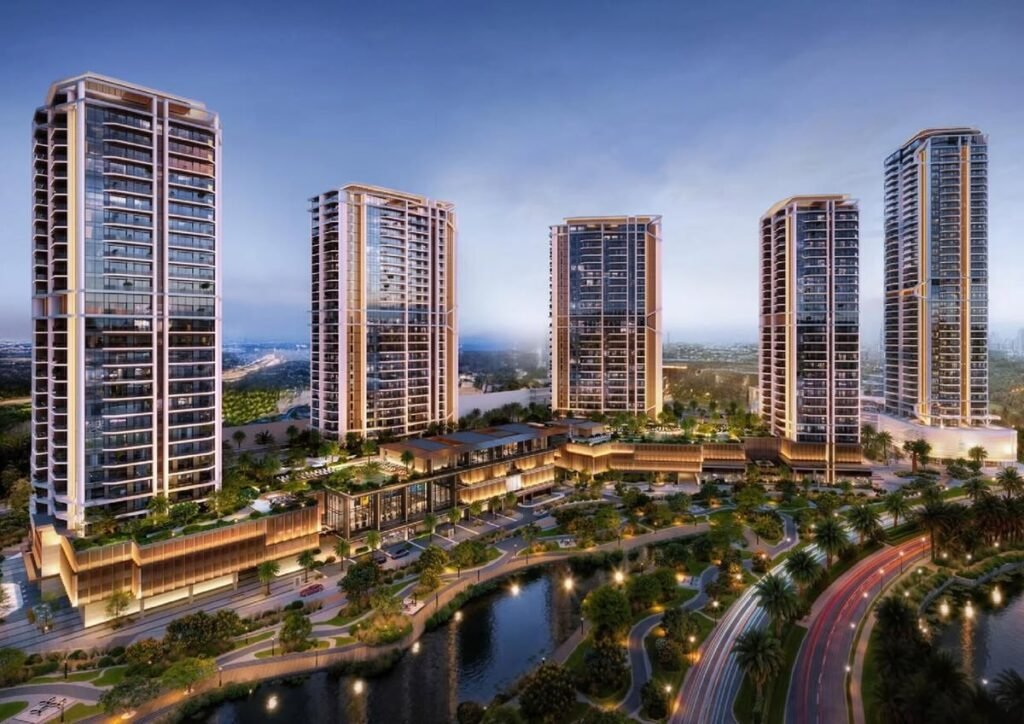
The trade-off. You’re buying a promise, not a product. Construction delays happen sometimes for reasons entirely outside the developer’s control and your capital sits generating no rental income while the building goes up, often for two to four years. Handover quality can differ from the brochure in small but real ways. And if you’re buying purely to flip before completion, you’re now more exposed to market timing than an investor who already owns a finished, income-producing asset. This is the segment where developer selection matters more than almost anything else on the spec sheet.
Ready Property: What You Gain, What You Give Up
The case for it. In a ready vs off-plan property Dubai comparison, what you see is what you get. You can inspect build quality, verify actual (not projected) rental demand in the building, and start collecting rent or move in almost immediately. There’s no construction risk, no handover date to track, no gap between purchase and income. For anyone prioritising cash flow over ground-floor pricing, that immediacy is the whole point.
The trade-off. You’re paying today’s price for a finished asset, which usually means a higher entry cost than the equivalent off-plan launch a few years ago carried. You inherit the building as it is its age, its maintenance history, its service charges rather than choosing every finish yourself. And in a market moving as fast as Dubai’s, the ready segment’s flatter recent growth (that roughly 9% Q1 2026 contraction in transaction volume) reflects buyers currently favouring the off-plan story. That can shift, but it’s worth knowing which way the current is running before you swim against it.
Rental Yields: Which One Actually Pays You?
This is where the ready vs off-plan property Dubai question gets more nuanced than “which grows faster.” Rental yield is really a ready-property conversation, since off-plan units don’t earn anything until they hand over.
As of early-to-mid 2026, Dubai’s average gross rental yield sits around 6.5-7%, with apartments outperforming villas roughly 7% gross for apartments against 4.5-6% for villas. That’s still comfortably ahead of mature global cities like London (3-4%) or Singapore (2-3%), and it comes with zero personal income tax on rental earnings, which is a structural advantage few other investment cities can match.
But the average hides a wide spread. Affordable, high-demand communities like Jumeirah Village Circle, International City, and Dubai Investments Park are regularly posting gross yields in the 8-10% range, while prime addresses like Palm Jumeirah or Downtown sit closer to 5-5.5% gross the trade-off there being stronger capital preservation and tenant quality rather than raw yield. And gross isn’t what lands in your account: after service charges, maintenance, vacancy, and management fees, net yield typically runs 1.5-2.5 percentage points below the gross figure you’ll see quoted in a listing.
The practical takeaway: if cash flow is your primary goal, a ready property in a proven mid-market rental community will usually outperform a freshly-handed-over off-plan unit in its first year or two, simply because it starts earning immediately and has an established tenant pool to draw from.
Payment Plans and Cash Flow
This is arguably the biggest lived difference in a ready vs off-plan property Dubai purchase, and it’s more about your financial planning than the property itself.
Ready property is typically a bigger cash event upfront deposit, transfer fees, agency commission, and either the full balance or a mortgage arrangement, all within a tight window. Off-plan spreads that same commitment over years, often in a 60/40 or 70/30 split between construction-linked instalments and a post-handover payment plan, sometimes extending two to three years after you get the keys.
For investors juggling multiple purchases or preserving liquidity for other opportunities, that structure is a genuine strategic tool, not just a marketing hook market commentary from agencies like Betterhomes has specifically pointed to buyers in 2026 using financing and instalment plans to preserve flexibility during a more uncertain macro environment, rather than because they can’t otherwise afford the unit.
The catch: a payment plan is only as good as your ability to meet every instalment, on schedule, for years. Missed payments on an off-plan contract can trigger penalties or, in serious cases, put your unit at risk. Map the full schedule against your actual income before you sign, not just the headline “20% down” figure in the ad.
Risk Factors Worth Watching in 2026
Every property market has a risk column, and the ready vs off-plan property Dubai decision is no exception.
For off-plan buyers, the core risks are developer delivery track record, construction delay, and increasingly this year supply concentration. With well over 400,000 units in the current development pipeline, some analysts are flagging that specific apartment-heavy communities could see pricing pressure if handovers cluster faster than demand absorbs them. That’s a reason to lean toward established, well-capitalised developers with a public delivery history, and to be more selective about location than the market was in 2021-2023.
For ready buyers, the risks sit elsewhere: paying a premium in a segment where transaction volume is currently softer, inheriting a building’s maintenance and service-charge profile, and in the resale market specifically needing to verify the seller’s title and any outstanding mortgage or service charge dues before you commit.
Broader 2026 conditions worth factoring in either way: elevated global uncertainty has put some short-term pressure on sentiment, and analysts are generally advising buyers to focus on fundamentals location, developer quality, genuine end-user demand over speculative, quick-flip strategies that worked more easily in the market’s hotter years.
Legal Protection: DLD, RERA, and the Escrow System
Whichever side of the ready vs off-plan property Dubai decision you land on, the emirate’s regulatory framework is one of the strongest reasons investors local and international feel comfortable committing capital here.
Every off-plan project must be registered with the Dubai Land Department before a single sale purchase agreement is signed or a single dirham collected. Under Law No. 8 of 2007, developers are required to hold every buyer payment in a project-specific escrow account, released only in stages as independently verified construction milestones are hit not on the developer’s say so. Under Law No. 9 of 2007, developers must also demonstrate they’ve already committed at least 20% of the project’s construction cost, in cash or bank guarantee, before marketing even begins. If a project is ever cancelled, the escrow bank not the developer is responsible for returning buyer funds.
Ready property transactions, meanwhile, are protected through DLD’s Title Deed registration system and the Real Estate Regulatory Agency’s oversight of brokers and transaction conduct. In both cases, your first practical step before paying anyone anything should be verifying the project’s registration and, for off-plan, its escrow account details directly through the Dubai Land Department’s official portal.
Ready vs Off-Plan Property Dubai: Quick Comparison Table
Here’s the full ready vs off-plan property Dubai comparison, side by side.
| Factor | Off-Plan | Ready |
|---|---|---|
| Entry cost | Lower, phased over time | Higher, mostly upfront |
| Rental income | None until handover | Immediate, if tenanted or tenant-ready |
| Capital appreciation potential | Higher, if delivered on time | Steadier, more predictable |
| Construction/delay risk | Present | None |
| Inspection before purchase | Not possible | Fully possible |
| Ideal holding period | Medium to long term | Short term or immediate income |
| Financing structure | Developer payment plan | Mortgage or lump sum |
| Best suited for | Capital growth-focused investors | Income-focused, risk-averse buyers |
Which One Fits You?
Neither option is a universal answer the ready vs off-plan property Dubai decision depends entirely on what you’re actually optimising for.
Off-plan tends to suit you if: you have a 3-5 year horizon, you’re comfortable with construction-period risk in exchange for lower entry pricing and appreciation potential, and you value the payment plan’s flexibility more than immediate rental income.
Ready tends to suit you if: you want rental income from month one, you’d rather inspect exactly what you’re buying than trust a floor plan, or you’re purchasing for near-term use your own residence, a Golden Visa qualifying purchase, or a quick-turnaround rental play in an established community.
A growing number of investors in 2026 aren’t picking one side at all they’re holding a blend: off-plan in emerging, well-located districts for growth, and ready units in proven rental communities for consistent yield. If you’d like to see how that mix could look for your budget, browse our current off-plan project listings alongside our handpicked ready properties, or read our companion guide on how NRI and international buyers can invest in Dubai property for the residency and financing side of the decision.
Frequently Asked Questions
Is off-plan property safe to buy in Dubai?
Yes, provided the project is registered with the Dubai Land Department and payments go through a verified escrow account under a RERA-approved bank. Always confirm the project’s escrow number directly through DLD before transferring any funds never to a private account.
In a ready vs off-plan property Dubai comparison, which gives better returns?
It depends on the metric. Off-plan has historically offered stronger capital appreciation if the project delivers on schedule, while ready property offers immediate, more predictable rental yield. Over a full holding cycle, well-chosen properties in either category can perform comparably the differentiator is usually location and developer quality, not the category itself.
Can I get a mortgage on an off-plan property in Dubai?
Some banks offer construction-linked financing for off-plan purchases, though terms and available loan-to-value ratios are generally more conservative than for ready property, where standard mortgage products apply.
Do off-plan and ready properties both qualify for a Golden Visa?
Both can qualify, provided the investment meets the current minimum property value threshold. Off-plan purchases typically need to meet specific payment or completion conditions, so it’s worth confirming eligibility for your specific project before assuming visa eligibility.
What happens if an off-plan project is delayed or cancelled?
Delays are handled under DLD and RERA oversight developers are required to keep buyers informed of revised handover timelines, and persistent non-delivery can trigger regulatory intervention. If a project is formally cancelled, the escrow trustee bank is legally obligated to refund depositors from the ring-fenced escrow funds, which is precisely why verifying that the escrow account exists and is active matters more than almost any other pre-purchase check.
Should a first-time investor start with ready or off-plan?
There’s no fixed rule, but many first-time Dubai investors lean toward ready property for their first purchase simply because it removes one variable construction risk while they’re still learning how the market, the paperwork, and the rental process actually work. Off-plan tends to reward buyers who already understand developer track records and are comfortable holding through a multi-year build cycle.
The Bottom Line
The ready vs off-plan property Dubai debate isn’t really about which property type wins it’s about matching the purchase to your timeline, your appetite for construction risk, and whether you need income now or growth later. Dubai’s 2026 numbers show a market that’s clearly leaning off-plan by volume, but a maturing one, where the smarter money is being more selective about developer, location, and fundamentals than it was a few years ago.
Whichever side of this you land on, the due diligence is the same: verify the registration, check the track record, and run the real numbers not just the brochure ones before you